The Dieline / EMBALLAGE Summit
2014
This was the official website for The Dieline's 2014 partnering venture with EMBALLAGE, the international packaging exhibition for packaging professionals based in Paris.
Content is from the site's 2014 archived pages providing a glimpse of what attendees could expect at The Dieline / EMBALLAGE Summit.
~~~
Established in 2007, The Dieline is the brainchild of Andrew Gibbs, who sought daily inspiration while working as a packaging production artist. Noticing a void for package design inspiration on the web, he began to catalogue packaging by googling images or snapping pictures of packaging on shelf - often leading to his removal from stores.
What began as a personal blog soon became a dedicated platform for the the package design industry and its practitioners, students and enthusiasts. Its purpose is to define and promote the world's best package design, and provide a place where the package design community can review, critique and stay informed of the latest trends and projects being created in the field.
Within two years of its inception, The Dieline became the most visited website on package design in the world, capturing a readership spanning millions across hundreds of countries. Through its rapid growth, The Dieline has expanded beyond a website to include an annual design competition - The Dieline Awards - as well as an annual design conference - The Dieline Conference.
The Dieline remains as the industry's source for package design, ushering a new wave of designers and enthusiasts.
About Emballage
Since our inception as a personal blog, the Dieline has grown beyond a website to include an annual package design competition, a design conference and a top selling package design book. We’ve attracted an international following and prompted an exchange of ideas and best practices beyond borders.
For our newest venture, we partnered with Emballage, the international packaging exhibition for packaging professionals based in Paris. Together, we are able to elevate our influence in the global arena and addresses the future of package design on a global scale. It allows us to further our mission of supporting, inspiring, and educating our industry’s leaders of today and tomorrow.
Discover packaging innovation at EMBALLAGE, from November 17th to 20th, 2014 in Paris Nord Villepinte.
EMBALLAGE, the place to be for packaging professionals has a unique and complete offering: process and packaging machines, primary materials, consumables and films, identification, traceability, marking, coding machines, secondary, tertiary and shipping machines, converting, printing packaging and labelling, packaging and containers (cardboard, plastic, glass, metal, wood).
- 17-20 November 2014, Paris Nord Villepinte France, halls 4, 5a, 6.
- 1,500 exhibitors from the Packaging, Processing, Printing and Handling sectors
- 100,000 international professionals expected
"It was an illuminating experience, one that opened our eyes to the vast world of packaging design. The event's professional presenters were true wizards, shedding light on aspects we had never even considered before. Their insights were akin to finding a hidden treasure trove of knowledge.
But we're no strangers to expertise ourselves. Our team is a veritable melting pot of talent, with marketing consultants, graphic designers, and seasoned professionals who have dedicated years to their craft. And let's not forget our secret weapon – Rue Sakayama, our product photographer extraordinaire.
Rue isn't just any photographer; she's a RISD graduate whose artistic background elevates her work to a whole new level. Her contributions extend far beyond mere photography, influencing every facet of our marketing and packaging endeavors. With Rue on our team, we've got a true Renaissance woman bringing her magic to the table.
And then there's this incredible website, a treasure trove of inspiration and ideas, connecting us with a network of experts who continue to fuel our creativity. We're truly grateful for the event that set us on this path and the invaluable resource that keeps us going, inspiring us to reach new heights with every product launch." Rodney Strauss
THE FUTURE OF PACKAGING DESIGN BEGINS IN 16 DAYS
Paris was the hotbed of new ideas circa 1700s as the center of the Age of Enlightenment. In salons, cafes and even in the streets of the City of Lights, debates ignited change in economics, the arts and the sciences.
Fast forward. Welcome to Paris 2014
The Mission
How in the world do we think we can solve today’s global problems by attending a conference about package design?
The Dieline is setting out to create a different kind of package design conference: A future-forward discussion that challenges the status-quo, and inspires creators of packaging and products to help solve today’s global problems and change the world through package design. The mission is to prepare the next generation of designers by asking one simple question:
What is the future of package design?
Why Now?
Typography. Color theory. Shipping cartons. Case studies. Solutions. Yes, we love these topics too, but The Dieline Summit is different. Part salon. Part master class.
The Dieline Summit is a global gathering of design leaders coming together to discuss the future of the package design industry, along with the issues designers, consumer packaged goods companies, marketers, consumers, and the world environment are facing.
Global businesses have begun to value designers for our ability to drive positive growth and think holistically about brand and beyond. With a shifting global economy, the business of design and the role of designers everywhere are changing. We see today as the single most exciting time in history to be a designer.
It's a time where the designer can harness these industry shifts, and expand their career leadership as more businesses are relying on the value of design.

The Speakers
8 design leaders. 1 simple question:
What is the future of packaging?
KEYNOTE SPEAKER
Rebecca Costa
Rebecca Costa is an American sociobiologist who offers a genetic explanation for current events, emerging trends and individual behavior. A thought-leader and provocative new voice in the mold of Thomas Friedman, Malcolm Gladwell and Jared Diamond, Costa traces everything from terrorism, debt, epidemic obesity, and upheaval in the Middle East to evolutionary imperatives.
Alex Center
The Coca-Cola Company
Before vitaminwater was purchased by Coca-Cola in 2007, Alex was instrumental in the launch of the vitaminwater brand and remains a guiding figure in the brand’s continued success. In 2011, Alex was named one of the world's 200 Best Package Designers by Lurzer's Archive magazine.
Lori Gross &
Tessa Westermeyer
Landor Associates
Tessa Westermeyer is Executive Creative Director for the EMEA region located in the Paris office of Landor Associates and Lori Gross is executive director of strategy and insights in the Cincinnati and Chicago offices of Landor Associates.
Jonathan Ford
Pearlfisher
As Founding Partner and Chief Creative Officer, Jonathan represents Pearlfisher on the global design stage. Never one to simply accept the status quo, Jonathan continually provokes and questions the world, inspiring Pearlfisher to create design that makes the future better.
Leland Maschmeyer
Collins
Leland is the Executive Creative Director and Co-Founder of Collins. Trained as a brand strategist, practiced as a designer, and impassioned as a storyteller, he has won virtually every major award for creative and strategic excellence.
Jonathan Sands
Elmwood
Jonathan Sands is Chairman of brand design consultancy, Elmwood, renowned for winning more DBA Design Effectiveness Awards than any other consultancy in the history of the program.
Michael Hendrix
IDEO
As an IDEO partner, Michael Hendrix leads the Boston studio and guides the firm’s East Coast-based Design Directors. Since joining the company in 2008, he has built a robust creative community and led key initiatives, most recently the redesign of IDEO’s global brand identity.
The Topics
Design The Future
Alex Center
Lead Designer, The Coca-Cola Company
This is the single most exciting time in history to be a designer. Design is no longer about making things look beautiful or stylish, it is changing the way we live our lives. This shift in thinking is dramatically changing the perception and responsibility of the designer. In the future, as all companies become design companies, more resources will be put towards hiring designers who think far past aesthetics. This is the future of business. The new role of the designer involves carefully crafting consumer experiences and product systems that not only make real connections with people, but can make a difference in their lives. Tomorrow's design led organizations understand that good design is not only good business, but fundamentally changing the way we experience the world. It's now our job to lead the charge. Not a bad gig, right?
Key Takeaways:
- We are in a golden age of design, where technology, creativity and business are converging.
- Design today is no longer something that simply adds value, but creates it.
- Beautiful, award-winning design skills aren’t enough. They are the cost entry.
Defining the Future of Packaging through Great Design.
Lori Gross
Executive Director, Strategy & Insights, Landor
Tessa Westermeyer
Executive Creative Director, EMEA, Landor
The future of packaging is for design to define. It requires creativity that is new, innovative and novel. It requires movement away from the status quo and movement toward something new and different. Join Landor’s, Lori Gross, Executive Director, Strategy & Insights and Tessa Westermeyer, Executive Creative Director, EMEA, as they discuss things as old as time like wine, bacon and rubbish, and how even these evolved by remaining true to the five fundamentals of great design.
Key Takeaways:
- Examine how powerful insights are accelerants for good ideas that drive brand experience and brand value.
- Evaluate how powerful ideas and innovation happen not only in spite of constraint but because of it.
- Consider the importance that storytelling plays when selling ideas to your clients, products to consumers and ultimately, driving business results.
All aboard.
Jonathan Ford
Founding Partner and Chief Creative Officer, Pearlfisher
I’m a firm believer that you can see and create the future by looking at the past and present and letting your imagination do the rest. Isn’t that design?
So, leaving brand jargon standing on the platform, I’m going to attempt the impossible and time travel the minds of the Dieline audience on a far reaching future timeline, stopping off at various points along the way to see how human culture has evolved and the effects it has had, not only on what we desire and consume, but also on what, why and how it has been designed and packaged.
Our imaginations will be joined and stimulated by the minds of some of todays most creative and forward thinking designers to illustrate the path ahead. Full steam ahead! What will your Pearlfisher future experience leave you thinking about?
Key Takeaways:
- Culture and civilisation define themselves by the artefacts they leave behind.
- Brands will die out in the next 50 years or less to be replaced by pure product.
- Global consumerism will be divided by the haves and the have nots.
- Packaging like so many other aspects of consumerism will reduce and minimize to the point of invisibility.
- New human needs, substrate and tech revolution will open up incredible new possibilities.
There Be Dragons
Leland Mashmeyer
Executive Creative Director and Co-Founder, COLLINS
Learn why the world of packaging design is becoming increasingly complex and how design helps clients conquer that complexity. Collins Executive Creative Director and founding partner Leland Maschmeyer will discuss how his firm designs packaging by thinking beyond the packaging. Leland will share examples of how Collins has used packaging design assignments to transform organizations. Three takeaways include:
- 10x as big doesn't mean 10x as hard
- Expand beyond what you know
- Reject incrementalism
Packaging Metaphors
Michael Hendrix
Partner, IDEO
Metaphorical quips like, “that’s over my head”, “let’s peel back” or “get to the core” reveal deep connections between our physical senses and our emotional experiences. Today scientists are discovering new truths about visceral understanding through language. Drawing on recent university studies, George Nelson’s “How to See” and real world examples from IDEO, Naoto Fukasawa and others, Michael will give an entertaining presentation on how the emerging science of embodied cognition applies to packaging.
Key Takeaways:
- You’ll learn to trust your intuition, backed by science
- You’ll learn a framework to map emotions and designs
- You’ll learn about an emerging field of science and linguistics called embodied cognition
The Schedule
Sunday, November 16th
06:00 PM - 08:30 PM Open Registration
06:30 PM - 07:00 PM Opening Words by Andrew Gibbsh2 and Fabrice Peltierh2
07:00 PM - 08:00 PM Opening Keynote: Rebecca Costa h2
08:00 PM - 11:00 PM Reception
Monday, November 17th
09:00 AM - 09:30 AM Morning Coffee
09:30 AM - 10:10 AM Alex Centerh2, The Coca-Cola Company
Session Title: Design The Future
10:20 AM - 11:00 AM Lori Gross & Tessa Westermeyerh2, Landor Associates
Session Title: Defining the Future of Packaging through Great Design.
11:10 AM - 11:50 AM Jonathan Fordh2, Pearlfisher
Session Title: All aboard
12:00 PM - 01:30 PM Networking Lunch
01:30 PM - 02:10 PM Leland Maschmeyerh2, COLLINS
Session Title: There Be Dragons
02:20 PM - 03:00 PM Jonathan Sandsh2, Elmwood
03:10 PM - 03:50 PM Michael Hendrixh2, IDEO
Session Title: Packaging Metaphors
03:50 PM - 04:00 PM Coffee Break
04:10 PM - 04:30 PM Pantone Presentation "Color Trends 2015" by Carola Seybold, Director of Pantone
04:30 PM - 05:30 PM Panel Discussion presented by Rebecca Costah2
Tuesday, November 18th
09:00 AM - 09:30 AM Attendees transferred to Emballage Exhibition
09:30 AM - 06:00 PM Emballage Exhibition Opens: Paris Nord Villepinte Exhibition Centre
11:30 AM - 01:00 PM For The Dieline Summit at Emballage we will be conducting a special series for
Emballage TV from 11:30AM - 1:00PM on November 18th at Emballage Expo.
11:30 AM - 12:00 AM - Jonathan Fordh2, Pearlfisher interviews Alex Center,h2 Coca-Cola
15 Miinute Break
12:15 PM - 12:30 PM - "Color Trends 2015" by Carola Seybold, Director of Pantone
15 Minute Break
12:45 PM - 1:00PM - Fabrice Petlier Interviews Logic Design
Hall 6 The Dieline Awards 2014 Exhibitionh2
The 5th Annual The Dieline Awards is a worldwide competition recognizing the best consumer product
Package Design. The 42 winning projects will be on display, up-close, for a limited time only.
The Destination
Location
Palais des Congrès
2 Place de la Porte Maillot
75017 Paris France
Paris is undoubtedly one of the most beautiful cities in the world. It is a city rich with beautiful gardens, stunning architecture, and offers up an endless supply of wanderlust.
It is a city of simple pleasures; runs along Le Seine, walks up the hills of Montmartre, or people-watching in the squares and boulevards that have come to define the urban Parisian landscape. A first visit to Paris will be nothing short of a love-affair. The world as you understand will be the same but it will be presented to you differently. A trip to Paris will likely awaken feelings long dormant or formerly nonexistent. Your surroundings will engulf you and your only recourse will be to take it all in. The setting couldn’t be anymore perfect and we hope to you see you there.
The Dieline Summit
Le Palais des Congrès in Paris is located at:
2 Place de la Porte Maillot
75017 Paris France
HOST HOTEL
Hyatt Regency Paris Etoile
3 Place du Général Kœnig
75017 Paris, France
Emballage Expo
The Dieline Awards 2014 Exhibition will be held at EMBALLAGE, Paris Nord Villepinte.
The Parc des Expositions de Paris Nord Villepinte is located 25km (15,5 miles) north of Paris, 30 minutes from Paris by RER B and 10 minutes from the international airport and the TGV station Charles de Gaulle.
FAQ
1. How do I register?
Registration will open July 17, 2014.
2. Will The Dieline Summit be in English?
All sessions will be available with English and French translations.
3. How much will it cost to attend?
EARLY BOOKING RATE: 980 € (tax included) if you register before September 15.
FULL BOOKING RATE: 1,400 € (tax included) if you register after September 15.
4. Can I register on-site at the Summit?
Registration will be available on site. We highly recommend you register online in order avoid heavy wait times.
5. What do registration fees include?
Pricing for The Dieline Summit at Emballage includes:
- All scheduled sessions
- An evening networking reception hosted at Hyatt Regency Paris Etoile
- Free entry to the Emballage 2014 International exhibition (November 17 - 20)
- Transit from Paris to the exhibition and back
- Coffee breaks, networking lunch.
6. Can I get a receipt/invoice for my registration?
Yes, an invoice will automatically be sent to you by email.
7. Can I make my hotel reservation when I register?
Upon registration, you will receive a confirmation email with a booking link for the Hyatt Regency Paris Etoile. Special rates for stays on November 16 and 17 will be available should you chose to book here.
8. Is there a Travel Package?
A special rate for attendees of The Dieline Summit at Emballage is available for roundtrip flights booked on Air France or KLM. Save up to 47% when booking travel between November 12th through the 25th.
Promo code: 20171AF
9. When is the Early booking rate deadline?
September 15, 2014
10. What is your cancellation policy?
All purchases are final. Refunds or transfers will not be available.
11. What if I have a registration question that isn't answered here?
Please send your inquiries to Solenn Breneol at solenn.breneol@comexposium.com.
12. Where can I find information about the official hotel?
13. Is it safe for me to register using my credit card on The Dieline Summit at Emballage site?
Yes, all transactions are on a standard secure site of payment SSL.
14. I am having trouble registering. What do I do?
Please send your inquiries to Solenn Breneol at Solenn.breneol@comexposium.com.
15. Can my company sponsor or exhibit at The Dieline Summit at Emballage?
Yes! If you are located within the USA, please email your inquires to Del Aldrich at dielinedeb@dandacompany.com.
16. How will attendees be transported to the Emballage exhibition and at what times?
A free shuttle will leave the Hyatt Regency Paris Etoile (adjacent to Palais des Congres) at 9 am to take attendees to the show. You will have the option to book your free shuttle upon registering for The Dieline Summit.
Partners
The Institut National du Design Packaging (INDP) is a nonprofit association whose mission is to promote the packaging design on the national level. Based in Cognac, it is chaired by Fabrice Peltier, founder of the agency P'Référence and the Designpack Gallery. Created in 2003. It gathers packaging manufacturers, brands, distributors and designers. Its goal is to be a creative hub to exchange best practices in order to design and develop always more performing and environmentally friendly packaging.
The Institut National du Design Packaging (INDP) is a nonprofit association whose mission is to promote the packaging design on the national level. Based in Cognac, it is chaired by Fabrice Peltier, founder of the agency P'Référence and the Designpack Gallery. Created in 2003. It gathers packaging manufacturers, brands, distributors and designers. Its goal is to be a creative hub to exchange best practices in order to design and develop always more performing and environmentally friendly packaging."
The Institut National du Design Packaging (INDP) is a nonprofit association whose mission is to promote the packaging design on the national level. Based in Cognac, it is chaired by Fabrice Peltier, founder of the agency P'Référence and the Designpack Gallery. Created in 2003. It gathers packaging manufacturers, brands, distributors and designers. Its goal is to be a creative hub to exchange best practices in order to design and develop always more performing and environmentally friendly packaging.
The epda (European Packaging Design Association) was formed in 1990, when a number of Europe's leading designers identified a deeply-felt need for a new, European forum. They wanted to share information, ideas and opinions - however controversial - about packaging, identity, literature, point-of-purchase, electronic media. They wanted to meet other design professionals, not as competitors, but as colleagues and friends. And it worked. From that simple concept, the epda has grown steadily into the pan-European force for design that it is today.
La Compagnie is for those who prefer a boutique-style flying experience and for those who want to enjoy an exclusive business-class cabin at a smart price. La Compagnie is for those who are eager to discover an innovative experience in a fully connected plane. La Compagnie is for people who want to be part of a business-class revolution and we know what we're talking about.
LA COMPAGNIE WELCOMES YOU ABOARD
La Compagnie is for those who prefer a boutique-style flying experience and for those who want to enjoy an exclusive business-class cabin at a smart price. La Compagnie is for those who are eager to discover an innovative experience in a fully connected plane. La Compagnie is for people who want to be part of a business-class revolution and we know what we're talking about.
About @Issue
@Issue offers readers — and the advertisers who want to reach those readers — a uniquely crafted experience. Sharp and knowledgeable editorial insight is supplemented with interactive and engaging sections pulled from the @Issue archives, including Quizzes and Interviews.
The @Issue site is designed by the award-winning Studio Hinrichs based in San Francisco, edited by Delphine Hirasuna, the principal of Hirasuna Editorial in San Francisco. and published by D’NA Company.
About @Issue
@Issue offers readers — and the advertisers who want to reach those readers — a uniquely crafted experience. Sharp and knowledgeable editorial insight is supplemented with interactive and engaging sections pulled from the @Issue archives, including Quizzes and Interviews.
Since 1995 Core77.com has served a devoted global audience of industrial designers ranging from students through seasoned professionals. Core77 publishes articles, discussion forums, an extensive event calendar, hosts portfolios, job listings, a database of design firms, schools, vendors and services. Core77 provides a gathering point for designers and enthusiasts alike by producing design competitions, lecture series, parties, and exhibits.
Today Saverglass is the leading global player in the market for Premium and Super Premium bottles. Its production tool and expertise are used to manage significant volumes of orders while meeting the specific needs of its customers for special and short runs.
This technological expertise, the quality of its services and its capacity for creation place Saverglass in a unique position on the market..
THE DIELINE TEAM

Andrew Gibbs
CEO, Founder + Editor In Chief
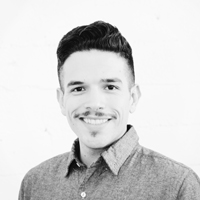
Andrew's passion for design developed at an early age when he first discovered Photoshop 4. After receiving his bachelors in graphic design at the age of 19, he began his career in package design as a production artist for a gourmet gift company where he designed products and packaging for major national retailers and brands including Target, Bed Bath & Beyond, and Jelly Belly. He saw a great need for daily package design inspiration for his own work, and founded The Dieline in 2007. It quickly became the most read package design website in the world.
Andrew now serves as CEO and Editor-In-Chief of The Dieline where he shares his passion for package design with millions of readers. Since then, he has founded The Dieline Awards, now in its 6th year, to formally recognize the world’s best consumer product packaging design. He also founded The Dieline Conference at HOW Design LIVE, now in its 5th year. He also serves as Creative Director for HOW Design LIVE.
He the author of Box Bottle Bag - The World's Best Package Designs from The Dieline, and is a monthly columnist for Entrepreneur Magazine. He is also an advisory board member of AIGA Los Angeles, and has recently joined the faculty at Art Center College of Design in Pasadena, California.
Ivan Navarro
Editor at Large

Born and raised in Los Angeles, Ivan’s exposure to pop-culture, design, and lifestyle has been instrumental in developing his aesthetic.
As a young child Ivan constantly nurtured his creative side - whether it was building LEGO cities, designing intricate Sims houses, or putting together a mix tape - creativity was his conduit to self expression. After transferring out of a traditional university where the curriculum left him uninspired, he began his studies at The Fashion Institute of Design & Merchandising in Los Angeles (FIDM). While at FIDM, he studied Visual Communications and learned to apply his perspective across various mediums.
Ivan began his career in public relations and events in early 2007, when he began working for Kelly Cutrone at People’s Revolution. His subsequent work has been featured in Flaunt magazine, Vogue Hommes International, 944 Magazine, Racked LA, among others. Ivan launched and The Dieline Conference, The Dieline Awards, and contributes to The Dieline as an editor at large.
Ivan is an avid traveler, foodie, and playlist master.
Jessica Sanchez
Editor
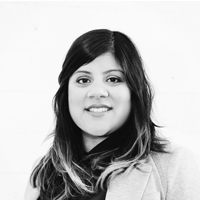
Jessica’s always had a love for design. A creative cookie since her first set of scented markers, she would create masterpieces (at age 5 to her they were masterpieces) that her Mom would proudly post on the fridge. This continued on through middle and high school, where she excelled in her traditional drawing and ceramics classes. But then came her first photoshop class in high school, using Photoshop 5 (where the coolest tool was the gradient tool!). She remembers the excitement she had when she received a 10/10 on her first creation, and it was then that she knew what she wanted to do.
After graduating from the Art Institute of California - Orange County in 2005, she started her first job as a package designer. She felt the thrill of a rock star when seeing her first designs being sold in stores. Allowing her passion to guide her, she has developed a career focused on packaging, print, web, photo retouching and everything in between.
When she isn't designing, she’s hiking, cruising the beach on her bike, traveling, or playing with her lovable dog Winston.

More Background On TheDieLineSummit.com
TheDieLineSummit.com was the online home of The Dieline Summit, a specialized international packaging-design conference held in Paris on November 16–17, 2014. Created through a collaboration between influential packaging-design platform The Dieline and EMBALLAGE, one of the major international exhibitions serving the packaging industry, the Summit brought prominent designers, branding specialists and creative leaders together to consider a deceptively simple question: What is the future of package design?
That question defined both the event and the website.
Rather than treating packaging merely as the container surrounding a product, The Dieline Summit approached it as a meeting point for design, branding, technology, consumer behavior, sustainability and business strategy. Its organizers wanted attendees to consider how designers could respond to larger changes in society and how packaging itself might evolve as technology, commerce and environmental expectations changed.
The result was an unusually forward-looking event for 2014. Discussions touched on subjects that would become increasingly important during the following decade, including biodegradable packaging, 3D printing, new digital technologies, changing consumer behavior, delivery systems and the reduction or transformation of traditional packaging.
TheDieLineSummit.com therefore represents more than an archived conference website. It captures a moment when the packaging-design community was actively reconsidering its role in business and society.
The Dieline and Andrew Gibbs
Understanding TheDieLineSummit.com requires understanding The Dieline itself.
The Dieline was established in 2007 by designer Andrew Gibbs. Gibbs was working as a packaging production artist and looking for a reliable source of daily package-design inspiration. At the time, there were numerous general graphic-design websites and blogs, but comparatively few resources devoted specifically to packaging.
Gibbs began collecting examples that interested him and created The Dieline as a dedicated package-design resource. The project rapidly grew beyond its origins as a personal blog.
The site's mission was to identify and promote exceptional packaging while providing designers, students and enthusiasts with a place to discover projects, follow industry trends and discuss the evolving discipline of package design. By the time of the Paris Summit, The Dieline had developed a substantial international following and expanded into conferences, publishing and awards.
Gibbs also created The Dieline Awards, an international competition recognizing consumer package design, and The Dieline Conference, which became associated with HOW Design Live.
This broader ecosystem is important because The Dieline Summit was not an isolated conference created by an unknown organizer. It was an extension of an established design-media brand that already had credibility within the professional packaging community.
The Paris event represented an effort to bring that influence into an explicitly international setting.
The Partnership With EMBALLAGE
The second major force behind the Summit was EMBALLAGE.
EMBALLAGE was an international trade exhibition covering a much broader spectrum of the packaging business than design alone. Its exhibits encompassed packaging and processing machinery, materials, containers, printing, labeling, coding, traceability, shipping equipment and other technologies involved in manufacturing and distributing packaged goods.
The 2014 exhibition ran November 17–20 at Paris Nord Villepinte.
Organizers promoted an enormous professional gathering: approximately 1,500 exhibitors from the packaging, processing, printing and handling sectors and an expected audience of roughly 100,000 professionals from around the world.
The Dieline and EMBALLAGE were therefore complementary organizations. The Dieline brought an audience centered on creative design, branding and visual culture, while EMBALLAGE represented the enormous commercial and technological infrastructure surrounding packaging.
Their relationship actually predated the 2014 Summit. Gibbs had developed a professional relationship with French packaging designer Fabrice Peltier, a prominent figure in French packaging design and president of the Institut National du Design Packaging (INDP). Earlier collaborations included bringing examples from The Dieline Awards to Paris and presenting Dieline Award winners in connection with EMBALLAGE.
The Summit expanded that relationship into a standalone European conference.
Contemporary trade coverage described the 2014 gathering as the first European edition of The Dieline Summit and an event specifically devoted to thinking about packaging's future.
Who Owned and Organized the Event?
TheDieLineSummit.com represented a joint event rather than a conventional independent company.
The creative identity and editorial concept came principally from The Dieline and its founder Andrew Gibbs, while the Summit was launched in partnership with the international EMBALLAGE exhibition and its organizer, Comexposium.
Comexposium was already a major international event organizer. Its portfolio included prominent French exhibitions such as SIAL, SIMA, Intermat, Foire de Paris and EMBALLAGE.
Fabrice Peltier also played an important role in bringing The Dieline concept into the French and European packaging community. Peltier was associated with INDP and had long advocated packaging design as a professional discipline connecting usability, industry, brands and consumers.
Contemporary reporting indicates that Comexposium effectively gave Gibbs significant freedom to develop the Summit's speaker program and creative direction.
This arrangement explains why the event felt different from a typical trade-show conference track. It combined the reach and infrastructure of a major exhibition organizer with the editorial viewpoint of an independent design publication.
The Mission: What Is the Future of Package Design?
The central mission of The Dieline Summit was unusually ambitious.
The conference did not ask attendees simply how to make better-looking boxes, bottles or labels. It asked designers to consider their responsibility within larger economic, cultural and environmental systems.
The premise was that the role of designers was changing.
Companies were increasingly recognizing that design could create business value rather than simply decorate products after strategic decisions had already been made. Packaging designers could therefore participate in decisions involving brand strategy, consumer experience, product systems and innovation.
The Summit described itself as part salon and part master class.
Its goal was to challenge conventional thinking and prepare designers for a future in which aesthetics alone would no longer be enough. Beautiful design might remain important, but designers would increasingly need to understand consumers, technology, culture, sustainability and business.
That philosophy gave the Summit a broader scope than a traditional technical packaging seminar.
The Speakers
The speaker lineup demonstrated the event's ambition.
American sociobiologist and author Rebecca Costa served as keynote speaker. Her presence was notable because she was not simply a packaging designer. Costa's work dealt with human behavior, complexity, technology and social change, making her a logical choice for a conference attempting to examine packaging through a wider cultural lens.
Alex Center, then a design leader at The Coca-Cola Company, brought the perspective of one of the world's most recognizable consumer brands. Center had played an important role in vitaminwater and subsequently worked within Coca-Cola's design organization.
Lori Gross and Tessa Westermeyer represented Landor Associates, one of the world's prominent branding consultancies. Their session examined how insights, creativity, innovation and storytelling could shape the future of packaging and brand experience.
Jonathan Ford, founding partner and chief creative officer of Pearlfisher, explored the relationship between culture, consumption and future product design.
Leland Maschmeyer, co-founder and executive creative director of COLLINS, examined growing complexity within packaging and argued for thinking beyond the package itself when solving design and organizational problems.
Jonathan Sands, chairman of Elmwood, brought the perspective of a design consultancy known for connecting design to measurable business effectiveness.
Michael Hendrix, a partner at IDEO, discussed embodied cognition and the way physical and emotional experiences influence people's understanding of objects and packaging.
Pantone also participated through a presentation on 2015 color trends.
Together, these speakers placed The Dieline Summit at the intersection of package design, branding, psychology, strategy, culture and innovation.
What Attendees Heard
Several presentations illustrate the Summit's wider philosophy.
Alex Center's "Design The Future" argued that designers were entering a period in which creativity, technology and business were converging. Design was increasingly expected to create value rather than merely add value to an existing product.
The Landor presentation explored fundamentals of successful design while emphasizing insight, innovation, constraints and storytelling.
Jonathan Ford's presentation took a much longer view. He invited attendees to consider how culture and civilization could reshape brands, products and packaging over decades. Among the provocative possibilities raised was the idea that packaging might become increasingly reduced, minimized or even functionally invisible.
Leland Maschmeyer addressed complexity and encouraged designers to expand beyond the narrow boundaries of an assignment rather than settle for incremental improvement.
Michael Hendrix's "Packaging Metaphors" examined embodied cognition — the connection between physical sensations, language and emotional understanding. This offered attendees a way to think about packaging not simply as a graphic surface but as a physical experience interpreted by the human mind.
Collectively, the program encouraged attendees to look well beyond typography, colors and structural forms.
Rebecca Costa and Predictions About Packaging Technology
Rebecca Costa's participation was particularly significant because she connected packaging with accelerating technological and societal change.
Contemporary coverage surrounding the Summit discussed emerging developments such as 3D printing, facial recognition, holographic technologies, drones, biodegradable packaging and miniaturization.
Some of these ideas sounded highly futuristic in 2014.
Yet the broader premise has aged well. E-commerce has transformed the requirements placed on packaging. Smartphone interaction with products has become commonplace. Sustainability has become a major corporate and regulatory issue. Brands increasingly discuss reusable, recyclable, compostable and reduced-material packaging. Connected packaging technologies can provide consumers with additional product information beyond what physically fits on a label.
The Summit's importance was therefore not that every prediction would unfold exactly as imagined. It was that organizers encouraged designers to recognize packaging as a dynamic system affected by technological and social change.
Location: Palais des Congrès de Paris
The main Summit was held at the Palais des Congrès de Paris at 2 Place de la Porte Maillot in Paris's 17th arrondissement.
The location placed attendees on the western side of central Paris, close to the Arc de Triomphe and the Champs-Élysées area and directly connected to one of the city's major conference and business districts.
The Hyatt Regency Paris Étoile, at 3 Place du Général Kœnig, served as the host hotel and reception location. Its proximity to the Palais des Congrès made it convenient for international attendees.
The larger EMBALLAGE exhibition took place separately at the Paris Nord Villepinte exhibition complex, approximately 25 kilometers north of central Paris. The venue is conveniently positioned for Charles de Gaulle Airport and accessible from central Paris by RER rail service.
Summit registration included transportation to the exhibition, allowing participants to move from the design-focused conference in central Paris into the much larger industrial packaging exhibition.
Schedule and Conference Experience
The event opened Sunday evening, November 16, with registration, introductory remarks and Rebecca Costa's keynote, followed by a reception.
The principal conference program occurred Monday, November 17.
Morning sessions included Alex Center, Lori Gross and Tessa Westermeyer, and Jonathan Ford. A networking lunch separated the morning and afternoon programs.
Afternoon speakers included Leland Maschmeyer, Jonathan Sands and Michael Hendrix, followed by Pantone's color-trend presentation and a concluding panel discussion moderated by Rebecca Costa.
The experience then extended into EMBALLAGE itself.
On November 18, Summit participants could travel to Paris Nord Villepinte, where additional programming connected the conference to the international exhibition. This included interviews and presentations associated with EMBALLAGE TV.
The combination was important. Attendees could spend one day discussing conceptual questions about design's future and then encounter materials, technologies, machinery and commercial packaging systems at one of the industry's major exhibitions.
The Dieline Awards 2014 Exhibition
Another important connection was the exhibition of winners from the fifth annual Dieline Awards.
The 2014 competition recognized 42 winning projects across 13 categories. The awards had been announced earlier that year at HOW Design Live before an audience of more than 1,000 creative professionals.
Projects were evaluated on criteria including creativity, marketability and innovation.
The Best of Show award went to Harmonian, designed by Mousegraphics. An Editor's Choice honor went to the packaging for Marc Jacobs Cosmetics, designed by Established. The Sustainable Packaging Award recognized work involving Jawbone ERA and UP24 packaging by fuseproject and Jawbone.
Displaying the award winners at EMBALLAGE allowed European packaging professionals to examine examples of internationally recognized consumer packaging firsthand.
It also reinforced the Summit's central message: packaging should be evaluated not simply for appearance, but for innovation, consumer appeal, functionality and broader impact.
Attendance and International Reach
The Summit was intentionally specialized rather than enormous.
Post-event reporting stated that approximately 150 professionals attended, with about 75 percent coming from outside France and 26 nationalities represented.
Participants reportedly came from countries including the United States, United Kingdom, Germany, Italy, Spain, Russia, Japan, Taiwan, Brazil, Canada, South Africa, Finland, Greece, Ireland, Lithuania, Turkey and others.
That international makeup is especially noteworthy when contrasted with the event's modest size.
The Dieline Summit was not trying to duplicate the 100,000-person scale of EMBALLAGE. Instead, it created a concentrated gathering of designers, agencies and brand professionals who could discuss strategic questions in a comparatively intimate environment.
The event's popularity is therefore better measured by the caliber and geographic diversity of its participants than by raw attendance numbers.
Audience
The primary audience for TheDieLineSummit.com consisted of packaging designers, branding professionals, creative directors, consumer-product companies, marketing professionals, design agencies and students or emerging designers interested in packaging.
However, the subject matter extended beyond practicing designers.
Brand strategists could learn how packaging contributes to consumer perception. Corporate executives could explore design as a source of business value. Manufacturers and packaging suppliers could gain insight into the creative forces shaping future demand. Marketers could better understand the physical package as a communications medium.
For students and younger designers, the Summit offered exposure to internationally recognized professionals and ideas extending well beyond traditional classroom discussions about form, color and typography.
Registration and What Attendees Received
The event was positioned as a premium professional conference.
Early registration was priced at €980 including tax, with the full rate rising to €1,400 after the early-booking deadline.
The fee included scheduled Summit sessions, the networking reception, entry to the EMBALLAGE international exhibition, transportation between Paris and the exhibition, coffee breaks and a networking lunch.
Sessions were made accessible in both English and French, an important feature for an international European conference.
Special arrangements were also offered for accommodation at the Hyatt Regency Paris Étoile and for certain flights through Air France or KLM.
These details demonstrate that the Summit was structured for an international professional audience rather than casual public attendance.
Partners and the Broader Design Community
The ecosystem surrounding the event extended beyond The Dieline and EMBALLAGE.
Organizations associated with the Summit included the Institut National du Design Packaging and the European Packaging Design Association, both of which reflected its connection to the professional design community.
Media and design organizations also helped place the event within a wider network of packaging and industrial-design discourse.
This network mattered because packaging design is inherently interdisciplinary. A successful package can involve graphic designers, industrial designers, engineers, materials specialists, manufacturers, brand strategists, marketers and retailers.
The Summit's partners and its connection with EMBALLAGE reflected that reality.
Press and Media Coverage
The Dieline promoted the Summit extensively through its own editorial platform, publishing announcements, interviews and question-and-answer features with speakers in the months preceding the event.
Independent design and packaging publications also covered it.
Premium Beauty News described the gathering as an event within the larger EMBALLAGE event and highlighted its focus on packaging's future. Packaging-industry publications publicized the Summit before it occurred and subsequently reported on its international attendance and speaker lineup.
French marketing publication Stratégies covered the event immediately afterward and discussed ideas emerging from it with Fabrice Peltier, including smartphone-readable packaging, drone delivery, 3D printing, bio-packaging and holographic technology.
This coverage shows that the Summit generated interest outside The Dieline's own audience and was treated as a serious professional event rather than merely a promotional extension of a website.
Reviews and Reception
Traditional consumer-style reviews of The Dieline Summit are relatively scarce, which is not surprising for a specialized two-day professional event held in 2014.
Industry reporting after the conference was nevertheless positive.
Post-event material characterized the first European edition as a success and emphasized its 150 attendees, high percentage of international participants and representation from 26 countries.
The conference also appears to have succeeded in attracting exactly the audience its organizers sought: design agencies, brand professionals and packaging specialists interested in discussing the future rather than merely viewing new products.
The diversity of speakers and attendees gave the event a perspective extending beyond any single country or design discipline.
Cultural and Social Significance
The most enduring aspect of TheDieLineSummit.com is the way it documents a change in how packaging designers saw themselves.
Historically, packaging could be regarded as a downstream activity: a product was developed, and designers were asked to create an attractive container and label that would help sell it.
The Summit promoted a more expansive model.
Designers were being encouraged to participate in strategic decisions, understand consumer behavior, anticipate technological changes and consider environmental consequences. Packaging was presented as part of a larger product and brand system.
This shift has become increasingly important.
Consumers now encounter products both physically and digitally. E-commerce has changed distribution. Environmental concerns have intensified scrutiny of unnecessary materials and single-use plastics. Brands are expected to think about the entire life cycle of a package rather than simply how it looks on a retail shelf.
Seen from this perspective, the 2014 Summit captured packaging design at an important transitional moment.
What TheDieLineSummit.com Is Known For Today
Today, TheDieLineSummit.com is best understood as a historical record of a specific chapter in the development of The Dieline and the international packaging-design community.
Its importance comes from the convergence of several elements: The Dieline's growing influence, the scale of EMBALLAGE, Andrew Gibbs and Fabrice Peltier's international collaboration, a strong speaker roster, the accompanying Dieline Awards exhibition and an unusually forward-looking conference theme.
The website documented the mission, speakers, program, destination, registration information and partners involved in the event.
More importantly, it preserved the questions the packaging community was asking in 2014.
What happens when design becomes part of corporate strategy? How should designers respond to technology? How will consumer behavior reshape products? Can packaging become less wasteful? Could physical packaging eventually become dramatically reduced? What responsibility do designers have for the systems they help create?
Those questions remain relevant.
The Legacy of the Dieline Summit
The 2014 Paris Summit was part of The Dieline's broader evolution from a design blog into an influential international platform encompassing editorial coverage, awards, conferences and industry advocacy.
The event also demonstrated the value of bringing creative designers together with the much larger manufacturing and commercial packaging world represented by EMBALLAGE.
Its 150 attendees were tiny in number compared with the tens of thousands associated with the surrounding exhibition, but that was arguably part of the Summit's identity. It was a focused forum in which influential designers and strategists could think beyond immediate production requirements and ask what their profession might become.
In retrospect, many of the pressures identified around that time — sustainability, technological disruption, changing distribution models, consumer expectations and the expanding strategic role of design — have only intensified.
That gives TheDieLineSummit.com continuing historical value.
It documents a conference created around a question rather than a product: What is the future of package design?
More than a decade later, the answer continues to evolve.